Human-centric lighting is lighting designed around people, not just spaces. In offices, schools, health facilities and public buildings, the light you provide affects comfort, alertness, wayfinding and how safely a space is used across the day.
Many projects still default to one static light level and one colour temperature. That can meet basic needs, but it often leads to avoidable complaints (glare, fatigue, inconsistent visibility) or poor day to night transitions. With modern LED and controls, it is practical to deliver lighting for well-being in a way that is still simple to operate and maintain.
LDP is an independent illumination and electrical engineering team. We design people-first lighting for projects in Auckland and across New Zealand. This article explains what human-centric lighting is, where it fits, and how to specify it so it performs in the real world.
In a hurry – direct answers
- Human-centric lighting is an approach that uses controlled light levels and colour appearance through the day to support how people work, learn and rest.
- It is usually delivered through LED luminaires plus a controls strategy (scenes, schedules, sensors) and proper commissioning.
- The goal is better comfort and usability, not a marketing feature or a guarantee of productivity or health outcomes.
- Good human-centric lighting balances biological cues with visual quality – glare control, flicker management, uniformity and colour rendering still matter.
- It is most valuable where people spend long periods indoors: workplaces, education, health settings and high-use public buildings.
- Daylight and electric light should be designed together so the space stays comfortable as conditions change (see daylight lighting).
- For an accurate scope and fee, send plans + site address, operating hours, and how the space is used day to day.
What is human-centric lighting?
Human-centric lighting is an approach to lighting design that supports both visual needs (seeing clearly and comfortably) and non-visual needs (supporting alertness by day and winding down at night). It typically uses tunable or scene-based lighting, backed by a controls strategy, so brightness and colour appearance can change through the day.
What it includes
- Light levels that suit the task, not a one-size-fits-all approach.
- Simple, purposeful controls (scenes, schedules and sensors) that match how the space will actually be used.
- Good visual quality: glare control, comfortable luminance balance, and appropriate colour rendering.
- Designing electric light alongside daylight lighting so the space stays usable as daylight changes.
What it is not
- A guarantee of productivity, wellness or clinical outcomes. Occupant response varies and good design still needs commissioning and tuning.
- A medical treatment. Lighting can support comfort and routine, but it does not replace clinical care.
- Just buying tunable fittings. Without a clear controls plan and proper commissioning, the system usually ends up being run as static lighting.

Understanding daily rhythms and light psychology
People respond to light in two main ways. First, we use light to see. Second, brightness and colour appearance can influence how alert or relaxed we feel. This is why the same space can feel energising at one time of day and uncomfortable at another.
Circadian rhythms in plain English
Your circadian rhythm is your internal daily timing system. Daylight is one of the strongest cues that keeps that timing on track. In general terms, brighter, cooler-appearing light earlier in the day supports alertness, while lower, warmer-appearing light later supports wind-down. The aim of human-centric lighting is not to mimic the sun perfectly, but to avoid obvious mismatches between how a building is lit and how people use it.
Light psychology and comfort
Light also shapes perception. Glare, harsh contrast, flicker, and poor colour quality can increase visual fatigue and lead to complaints, even if the measured light level looks acceptable on paper. A people-first design brief should treat visual comfort as a core requirement, not an optional extra.
Human-centric lighting benefits in real projects
The value of human-centric lighting is normally felt in fewer complaints, better usability, and clearer alignment between how the space is lit and how it is used. Below are common outcomes by environment.
Workplaces and offices
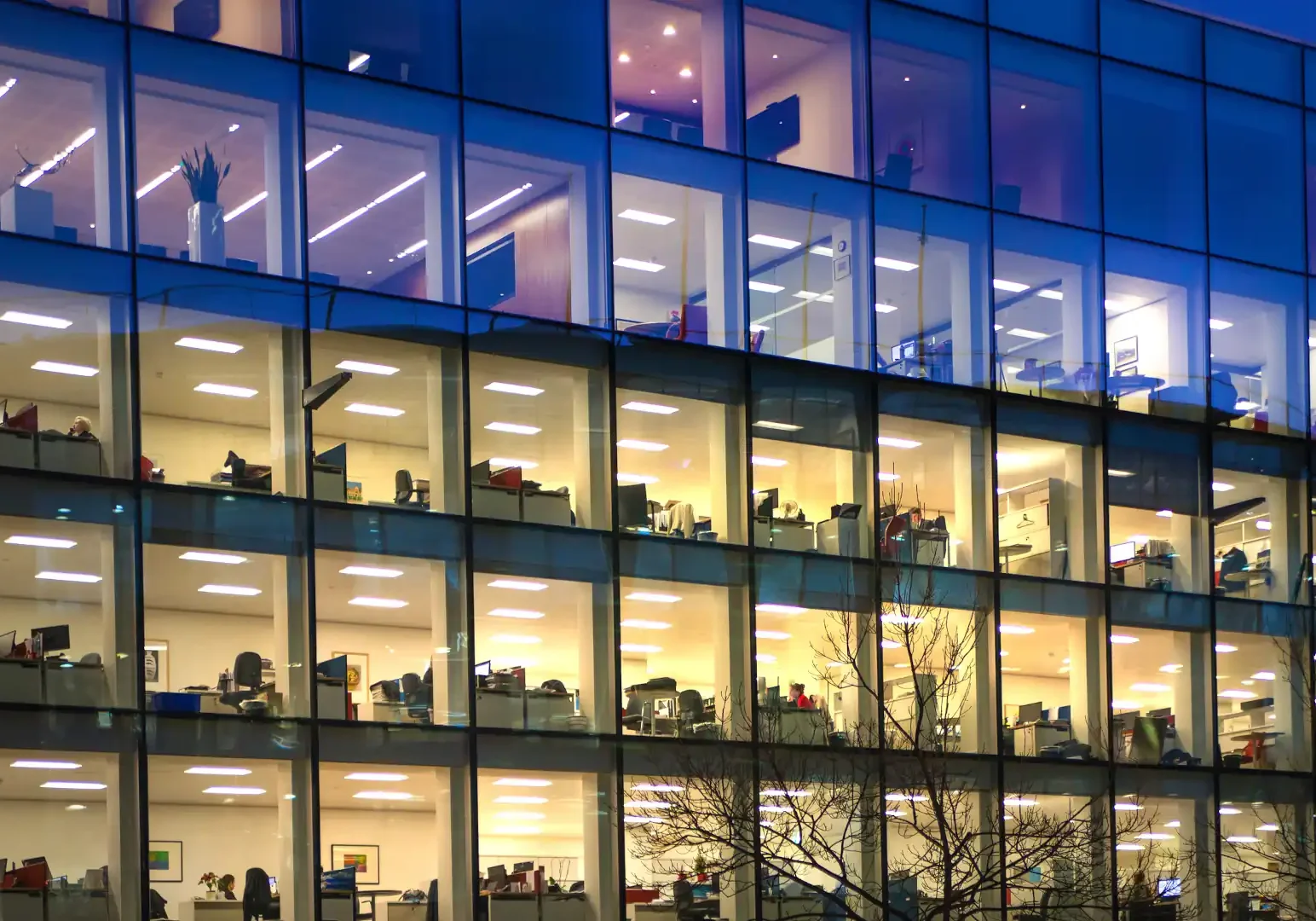
In offices, dynamic scenes can support focus work in the morning, reduce glare and screen reflections, and avoid over-bright late afternoon lighting. For hybrid working environments, occupancy-driven control can maintain comfort while avoiding wasted energy in under-used zones.
Education and training spaces
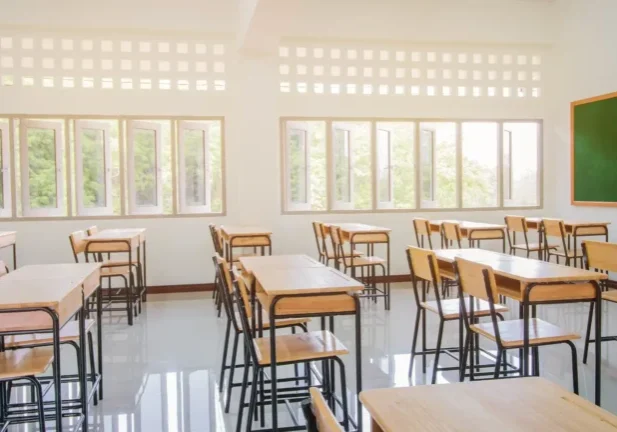
In classrooms and learning spaces, human-centric lighting can support clear visibility of teaching surfaces, reduce eye strain, and provide simple scenes for different activities (teaching, group work, presentations, cleaning). The priorities are consistency, glare control, and controls that staff can use without training manuals.
Health settings and care environments
In hospitals, clinics and aged care, lighting needs to balance clinical task requirements with patient comfort. Human-centric approaches are often used to support calmer night-time conditions, safer wayfinding, and appropriate task lighting for staff. For specialist spaces, refer to health and medical lighting requirements early, as the lighting brief can be driven by clinical workflows and risk controls.
Public buildings and the public realm
In libraries, civic buildings, transport facilities and other public assets, lighting influences safety, wayfinding, amenity and perceived care of the place. For exterior spaces, good Urban lighting must also consider spill light, glare, ecological effects and community expectations. A human-centric brief helps you avoid lighting that is technically compliant but disliked by users.
Need human-centric lighting that performs in the real world? Talk with our lighting design experts. For a fast, decision-ready scoping view, send plans + site address and tell us how the space is used across the day.
Stage table: how human-centric lighting is delivered
Human-centric lighting works best when it is treated as a staged design and commissioning process, not as a last-minute product selection.
| Stage or scenario | What is needed | Why it matters | Typical outputs |
|---|---|---|---|
| Project brief / feasibility | Agree the outcomes: visual tasks, operating hours, user groups, constraints (glare, reflections, ecological or spill limits where relevant). | Sets a realistic performance target and avoids redesign later. | Brief notes, performance criteria, early risk flags. |
| Concept design | Lighting strategy, preliminary luminaire selection, initial modelling, and a simple control approach that matches how the space will be used. | Confirms the concept is buildable, compliant and within budget before detailed documentation. | Concept report, preliminary layouts, modelling summary. |
| Developed design | Coordinate with architecture, electrical and controls. Confirm scenes, schedules and sensor logic. Allow for daylight lighting integration and shading strategy. | Avoids clashes, control complexity and late changes that cause programme slip. | Updated calculations, coordinated drawings, control narrative. |
| Detailed design / documentation | Final layouts, luminaire schedule, specifications and control wiring detail. Review glare, flicker and maintainability. | Gives contractors clear information, reduces RFIs and limits substitutions. | Issued-for-tender drawing set, schedules, specification, calculation pack. |
| Construction support (if included) | Answer tender queries, assess substitutions, site observations, and shop drawing review where agreed. | Protects performance and reduces the risk of value engineering undoing the intent. | Tender clarifications, review notes, site reports. |
| Commissioning and tuning | Set scenes, schedules and sensor settings. Confirm post-occupancy user handover and fine-tune after occupants move in. | Human-centric lighting only works if it is commissioned and kept simple enough to use. | Commissioning checklist, settings schedule, handover notes. |
How to implement human-centric lighting without overcomplicating it
A good solution is usually simple: the right luminaires, the right control intent, and commissioning that matches the brief. The complexity comes when the system is specified without thinking about who will operate it.
1) Start with a people-first brief
Define the user groups, the tasks, and the hours of use. Identify what ‘good’ means for the project: fewer complaints, better visual comfort, safer movement at night, or support for shift work. This is where light psychology and human factors belong, before drawings and product schedules.
2) Design daylight and electric light as one system
Daylight varies by season, weather and façade design. If the project has good access to daylight, use daylight lighting principles so the electric lighting supports it rather than fights it. That can mean controlling glare, balancing contrast, and using sensors to avoid over-lighting when the sun is doing the work.
3) Keep controls intuitive
Most complaints about human-centric lighting are really controls problems. If the control interface is confusing, the system gets overridden and left in one mode. Keep scenes limited, label them clearly, and align scheduling with actual occupancy patterns. Where building management systems are involved, confirm early who owns what.
4) Commission and tune, then lock in the settings
Commissioning is where the intent becomes reality. Plan for scene setting, sensor calibration, and a short post-occupancy tune after users move in. This helps avoid a common failure mode: a good design that is never actually switched on the way it was intended.
Common mistakes (and how to avoid them)
- Specifying tunable white but not specifying how it will be controlled or commissioned.
- Over-lighting spaces because the design did not account for daylight, surface reflectance or task needs.
- Ignoring glare and reflections (especially in screen-based workplaces).
- Using complex controls that operators cannot maintain or understand.
- Allowing substitutions that change flicker performance, beam control, or colour quality without review.
- For exterior work, not checking spill light and glare requirements early – council requirements and consent conditions vary.
What you receive (typical deliverables)
Deliverables vary by scope and procurement route, but a typical human-centric lighting package can include:
- Lighting strategy and concept options aligned to the brief (PDF).
- Lighting calculations and modelling summaries where required (PDF, with supporting files where agreed).
- Luminaire schedule and performance requirements suitable for tender (PDF).
- Control intent narrative (scenes, schedules, sensors) and coordination notes.
- Drawings for installation and coordination (PDF and CAD formats where agreed).
- Tender and construction support such as substitution reviews and site observations, if included in scope.
- Commissioning checklist and settings schedule, if included in scope.
Scope caveats: council and consent requirements vary. Final outcomes depend on the brief, the chosen luminaires, and commissioning on site. Electrical installation and compliance are carried out by appropriately registered contractors. Specialist disciplines (for example, medical planning, building services commissioning or acoustics) may be separate.
What we need from you to scope it quickly
If you want a clear scope and fee with minimal back-and-forth, send:
- Site address and project location (Auckland or elsewhere in New Zealand).
- Project type and key spaces (office, education, health, public building, exterior areas).
- Plans (architectural and reflected ceiling plans if available) and ceiling heights.
- How the space is used across a typical day (operating hours, shift work, peak times).
- Daylight conditions and shading intent (glazing, skylights, blinds).
- Any known constraints: glare complaints, dark sky expectations, neighbour sensitivity, or consent conditions.
- Programme milestones and procurement route (design and build, traditional tender, staged delivery).
- Existing lighting and controls information for refurbishments (photos, as-builts, control platform)
FAQs
What is human-centric lighting?
Human-centric lighting is lighting designed around people. It uses appropriate light levels, colour appearance and controls through the day to support comfort, usability and day to night transitions.
Is human-centric lighting the same as tunable white?
Not always. Tunable white can help, but human-centric outcomes depend on the full system: the luminaires, the controls strategy, commissioning, and how users interact with it.
Does human-centric lighting guarantee better productivity or health?
No. Lighting can support comfort and routine, but outcomes vary by person and by environment. Treat it as a design approach that reduces common lighting problems and improves usability.
Can human-centric lighting be retrofitted into existing buildings?
Often, yes. The feasibility depends on the existing wiring, controls, and luminaire types. A staged approach is common: start with key areas, confirm performance, then expand.
Will it increase energy use?
Not necessarily. If the system is well controlled, energy use can reduce through dimming, occupancy sensing and daylight response. Poorly commissioned systems can waste energy, so control intent matters.
Do we need a building management system to do this?
Not always. Many projects use standalone lighting controls. Where a building management system is involved, roles and interfaces should be defined early so the system remains maintainable.
What about glare, flicker and visual comfort?
They are still core requirements. A human-centric approach should not trade comfort for a ‘cooler’ light. Beam control, luminaire placement, flicker performance and scene settings all matter.
Where does this fit with exterior and public space lighting?
Human factors matter outdoors too: safety, wayfinding, facial recognition, and comfort. Exterior design also needs to consider spill light, glare and environmental effects – see Urban lighting.
Next steps – choose your path
If you are planning a people-first lighting upgrade or a new build, we can help you make clear decisions early and keep the programme moving.
- Send plans + site address – the fastest way to get an accurate scope and next steps.
- Book a short scoping call – talk through the project outcomes, constraints and programme.
- Request a proposal – for end-to-end support across concept, documentation and delivery support.