In a hurry? Different types of lighting explained
- The phrase types of lighting usually means two things: the lighting layers (ambient, task, accent) and the lighting system types (for example high bay, troffers, floodlighting, street and area lighting).
- The right choice depends on the use of the space, mounting height, glare and spill risk, colour quality, environment (wet, corrosive, hazardous), and maintenance access.
- Start with the task and safety outcomes, then choose optics and distribution to avoid over-lighting and avoidable complaints.
- Outdoor projects often need careful obtrusive light control (glare and light trespass) and may have council, neighbour, ecological or dark sky sensitivities.
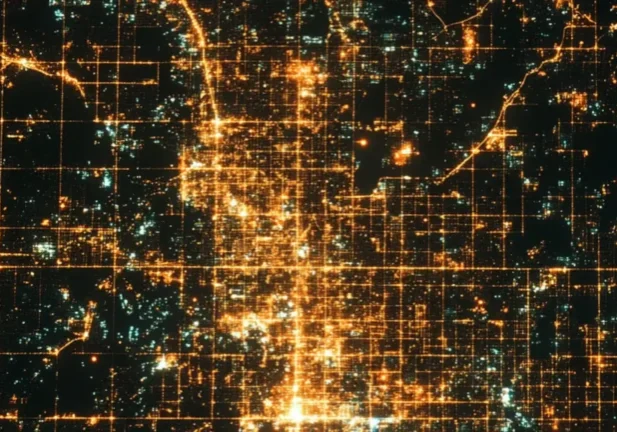
- For streets and precincts, Urban lighting systems should be considered as a coordinated whole, not just individual fittings.
- For offices and education, comfort (glare control and uniformity) and controls strategy often matter as much as brightness.
- Engage early (concept or developed design) to reduce redesign once ceilings, poles, structure and power allowances are locked in.
- To get a fast scope, send plans + site address, intended use, mounting heights (or ceiling heights), operating hours, and any consent or stakeholder conditions.
If you are comparing types of lighting, you are usually trying to make a space work properly for the people using it, without creating glare, wasted energy, or expensive rework later.
This page is a practical lighting applications guide for early decisions. It is not a product list. Good outcomes come from matching the lighting system to the task, the mounting conditions, the control strategy, maintenance access and any approval constraints.
If you want independent advice from lighting consultants, LDP can help confirm the best approach and document it for consenting and construction.
What do we mean by ‘types of lighting’?
People use the term in two different ways, and both matter:
- Lighting layers: ambient light for general visibility, task light for work areas, and accent or feature light to guide attention and improve legibility.
- Lighting system types: the physical luminaires and layouts that deliver the light, such as high bay fittings, troffers, floodlights, street and area luminaires, and specialised fittings for harsh or hazardous environments.
How to choose the right lighting system
When you are comparing types of lighting system options, start with this short checklist:
- Purpose and users: what tasks happen here, who uses the space, and what safety outcomes are required.
- Geometry and mounting: ceiling or pole height, spacing, structure constraints, and where light must land (horizontal and vertical).
- Glare and spill: the risk of discomfort, reduced visibility, neighbour impacts, and light trespass into adjacent properties.
- Colour temperature and colour quality: match the use and finishes, and avoid patchy colour across adjoining spaces.
- Controls and operating profile: zoning, dimming, sensors, time clocks and scene control based on how the site actually runs.
- Maintenance and whole-of-life: access for cleaning and replacement, aiming stability, and how performance changes over time.
- Approvals and documentation: requirements vary by site. Confirm early if a project has specific council, consent or stakeholder conditions.
Projects often need to meet relevant standards, codes and consent conditions. The exact criteria depend on the use, the client brief and the site context, so it pays to confirm the requirements early rather than assume.
Book a short scoping call, or send plans + site address so we can confirm the right lighting approach, key risks and next steps.
Common types of lighting systems and where they fit
High bay and low bay lighting
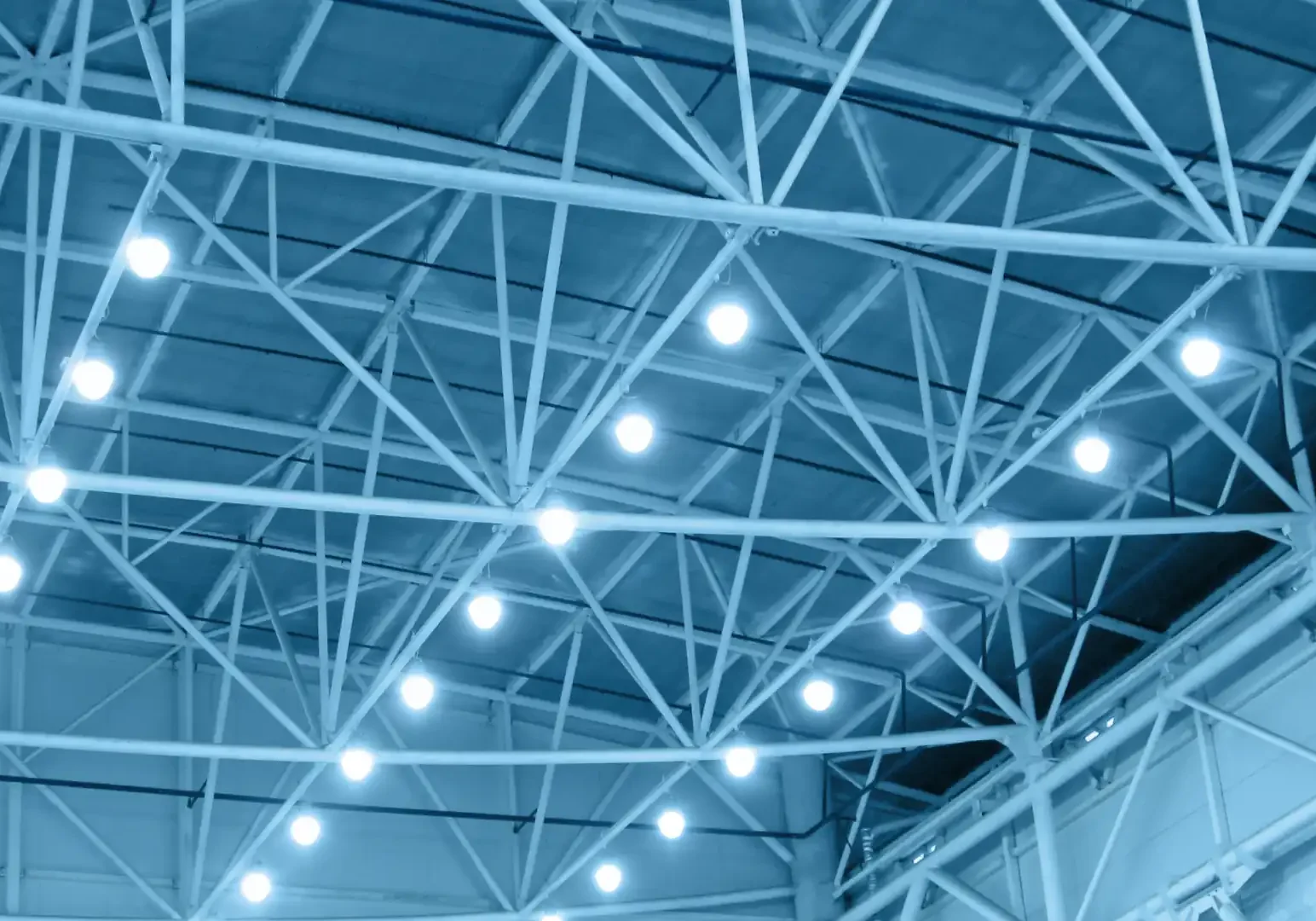
Used for warehouses, workshops, industrial facilities, some sports arenas and high-ceiling retail spaces.
High bay and low bay are common types of lighting system for large open interiors. The key is achieving even coverage with comfortable glare control, while keeping maintenance practical.
- Mounting height: higher mounting typically needs tighter optical control to avoid wasted light and glare.
- Uniformity: avoid bright spots and dark patches that reduce safety and usability.
- Glare control: optics, shielding and layout matter, especially in forklift aisles and high contrast spaces.
- Controls: occupancy-based dimming and zoning can materially reduce operating cost where spaces are not always fully occupied.
- Maintenance access: plan access routes and replacement strategy early so it does not become a safety issue later.
Parking and area lighting
Used for commercial car parks, transport hubs and outdoor circulation spaces.
Good area lighting balances visibility, security and amenity, without excessive glare or spill into neighbouring properties.
- Vertical illumination and facial visibility: important for pedestrian comfort and wayfinding, and for CCTV where it is part of the security approach.
- Light trespass: manage spill at boundaries, windows and sensitive receivers.
- Pole heights and spacing: a layout decision that affects uniformity, glare and total number of fittings.
- Controls and operating profile: consider late-night dimming, motion response and event modes where relevant.
For streets, town centres and precincts, urban lighting systems often need an integrated approach across roads, paths, planting and adjacent uses.
Hazardous location and harsh environment lighting
Used for heavy industrial sites, certain airport and port zones, and environments with heat, corrosion, vibration or flammable atmospheres.
Where a site is classified as a hazardous area, the lighting fittings may need specific certification (for example IECEx or ATEX) and installation requirements. Hazardous area classification is a specialist topic and should be confirmed for the site.
- Environment rating: select fittings and materials suitable for dust, moisture, chemicals and washdown where relevant.
- Thermal management: heat can shorten life and reduce performance if not managed in the fitting selection and layout.
- Vibration and impact: mounting and aiming stability matter in transport and heavy plant environments.
- Maintainability: plan safe isolation, access and replacement so compliance does not rely on luck.
Floodlighting
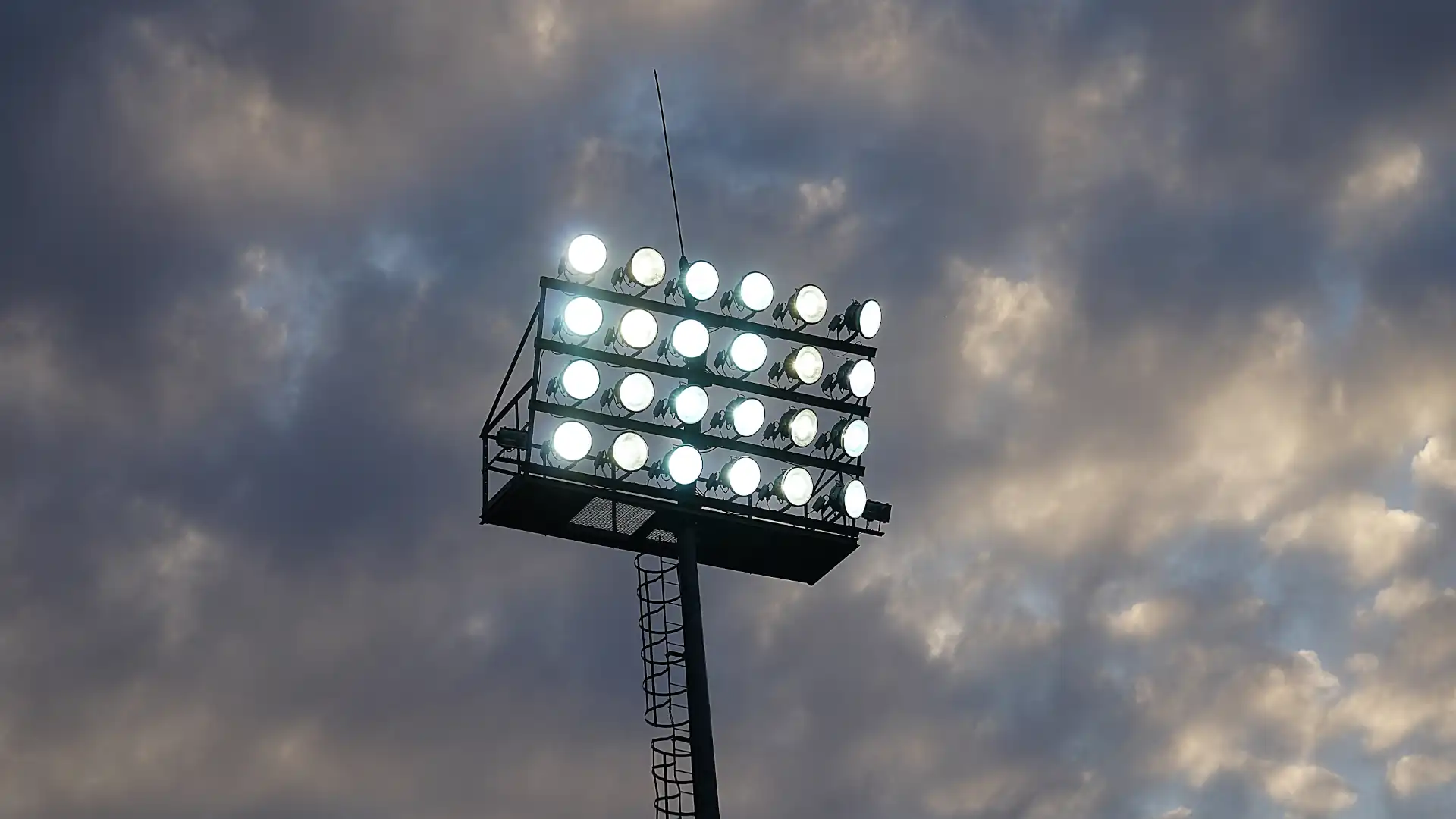
Used for sports fields, stadia, ports, airports and public event spaces.
Floodlighting is about delivering sufficient light to a large area while controlling glare and spill. Aiming, shielding and modelling are often the difference between a good outcome and ongoing complaints.
- Glare control: high-output fittings can be uncomfortable if aiming and shielding are not managed.
- Spill and obtrusive light: consider neighbours, roads and sensitive environments early.
- Uniformity: athletes and operators need consistent light across the task area, not isolated bright zones.
- Flicker and camera performance: relevant for broadcast or high-speed camera use, and should be confirmed in the brief.
- Controls: event modes and scene control may be useful where a venue runs multiple use cases.
Troffers, panels and office lighting
Used for offices, schools, universities and general educational settings.
In these environments, comfort and legibility are often driven by glare control, uniformity and colour quality rather than maximum brightness.
- Glare: diffuser choice, shielding and luminaire placement affect visual fatigue.
- Uniformity: avoid harsh contrast across desks, whiteboards and circulation areas.
- Colour temperature: should suit the activity and materials, and be consistent across adjacent zones unless deliberately designed otherwise.
- Controls: daylight response and occupancy control can reduce energy while supporting comfort.
Street and tunnel lighting
Used for highways, bridges, urban streetscapes and road tunnels.
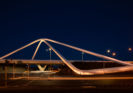
Road and tunnel lighting needs to support safe navigation while managing glare, energy use and environmental impacts. Tunnel lighting also typically involves transition zones so drivers can adapt safely from daylight to interior conditions.
See a practical example in the Auckland Viaduct project case study.
- Glare and uniformity: critical for road safety and user comfort.
- Maintenance access: plan safe access for replacement and cleaning, especially on bridges and in tunnels.
- Controls and monitoring: useful for traffic-based dimming and fault detection where the asset owner requires it.
- Approvals: requirements vary by road controlling authority and council conditions, and should be confirmed early.
Project stages and typical lighting outputs
The exact scope varies by project, but the table below shows a typical end-to-end pathway and what each stage produces.
| Stage or scenario | What is typically needed | Why it matters | Outputs you can use |
|---|---|---|---|
| Feasibility or concept | Brief review, constraints, initial lighting approach, and early coordination with architecture and site conditions. | Sets direction early and reduces redesign once heights, mounting and materials are locked in. | Concept lighting narrative, preliminary layouts, and key assumptions. |
| Developed design | Luminaire strategy, modelling, preliminary selection, controls intent, and coordination with structure and services. | Improves certainty, reduces late changes, and helps protect programme and budget. | Design report, modelling outputs, coordinated drawings and schedules. |
| Consenting or stakeholder approvals | Documentation to support approval conditions (for example spill, glare or effects in outdoor and public environments) and responses to stakeholder queries where scoped. | Reduces approval risk and supports a clearer path through review and conditions. | Council-ready drawings and supporting reports (requirements vary by council and consent conditions). |
| Detailed design and tender | Final layouts, specifications, coordination details, and tender-ready schedules. | Reduces construction queries and variations, and improves pricing accuracy. | Tender documentation package and final luminaire schedules. |
| Construction and commissioning support | Technical support for RFIs, review of substitutions where scoped, aiming and commissioning guidance, and issue resolution. | Protects the design intent and reduces defects that only show up after handover. | Commissioning notes, review comments, and practical guidance for installers. |
| Verification or audit | Post-install measurement and verification where required. | Confirms installed performance and identifies issues early while they are still fixable. | Measurement report, evidence for compliance where required, and remedial recommendations if needed. |
What you receive (typical deliverables)
Deliverables depend on project type and scope, but commonly include:
- Lighting design report and assumptions (PDF).
- Lighting layouts and details suitable for coordination and construction (PDF, and CAD where agreed).
- Luminaire schedules (often Excel) including key performance data needed for procurement.
- Lighting calculations or modelling outputs (PDF).
- Controls intent and zoning notes (as scoped).
- Support for tender queries and substitution reviews (where included).
Scope caveats
- Council and consent requirements vary. Confirm early if a project has specific glare, spill, ecological or amenity conditions.
- Lighting design does not replace electrical installation design or contractor shop drawings unless that is explicitly included in scope.
- Hazardous area classification and certification requirements should be confirmed for the site and may require specialist input beyond lighting layout and selection.
- Energy and maintenance outcomes depend on baseline conditions, operating profile, installation quality and commissioning.
What we need from you (to scope accurately, fast)
If you want an accurate scope and fee with minimal back and forth, send:
- Plans or models (PDF is fine) and the site address.
- The intended use of each area, operating hours and any key user groups (public, staff, students, athletes, residents).
- Ceiling heights, pole heights, mounting constraints, and any known surface finishes or reflectance drivers (if available).
- Any council or consent conditions, stakeholder requirements, or known sensitivities (neighbours, ecology, dark sky).
- Programme: key dates for design freezes, consenting, tender and installation.
- Your preference on supply model (client-supplied, contractor-supplied, nominated fittings) if already decided.
Common mistakes and what can go wrong
Most lighting problems are avoidable. The common failure modes usually look like this:
- Leaving lighting until late, after ceilings, structure and pole locations are fixed.
- Selecting fittings before modelling, then discovering glare, spill or poor uniformity on site.
- Over-lighting to be safe, which can increase energy use, complaints and long-term operating cost.
- Underestimating maintenance access and replacement strategy, especially for high mounted luminaires.
- Inconsistent colour temperature or colour quality across adjoining spaces, making a project feel patchy.
- Controls that do not match how the space is actually used, leading to overrides and wasted energy.
- Poor coordination of luminaire locations with structure, sprinklers, HVAC, signage and CCTV.
FAQ
What are the main types of lighting in a building?
Most buildings use a mix of ambient lighting (general visibility), task lighting (work areas), and accent or feature lighting (wayfinding and emphasis). The fitting types that deliver this vary by space, such as troffers in offices or high bay fittings in warehouses.
What is the difference between ambient, task and accent lighting?
Ambient lighting provides general background light. Task lighting is targeted to where people work or need accuracy. Accent lighting highlights features or supports wayfinding. Good design uses the mix that suits the activity, not a one-size approach.
How do I choose colour temperature and colour quality?
Choose what suits the activity, materials and desired feel. Consistency across adjacent spaces matters. Where accurate colour judgement is important (for example retail or certain work tasks), specify appropriate colour quality in the brief.
What matters most for car parks and outdoor areas?
Uniformity, glare control and boundary spill are usually the big drivers. Outdoor lighting can affect neighbours and sensitive environments, so confirm any council or consent conditions early and design to manage obtrusive light.
Do I need to meet standards or council requirements for lighting?
Often yes, but the requirements depend on the site and use. Some projects have consent conditions or stakeholder requirements about glare, spill or effects. Confirm the criteria early so design decisions are defensible later.
What is hazardous location lighting and when is it required?
It is lighting designed for environments where heat, corrosion, vibration or flammable atmospheres create higher risk. If an area is classified as hazardous, fittings may need specific certification and installation requirements. Classification should be confirmed for the site.
What deliverables should I expect from lighting consultants?
Typically: a short design report of assumptions, layouts, schedules, modelling outputs and a controls intent. Deliverables vary by project stage and whether consenting or stakeholder documentation is required.
When should I engage a lighting consultant for best value?
Ideally at concept or developed design. Early input helps avoid redesign once ceilings, structure, poles and power allowances are locked in, and it reduces the risk of late variations.
Next step – choose your path
If you want fewer surprises and better certainty of return, engage lighting early. Choose the pathway that fits where your project is at:
- Book a short scoping call to confirm scope, risks and next steps.
- Send plans + site address and a short brief for a fast, accurate proposal.
- Already in consenting or construction? Send the conditions or issue list and we will advise the quickest way to regain momentum.
| Pathway | Best for | What to send |
|---|---|---|
| Book a scoping call | Early stage, options still open, you want fast clarity on scope and risk. | Site address, a short brief, and any concept plans or sketches (PDF). |
| Send plans + site address | You have drawings and want a clear proposal and deliverables list. | PDF plans or model exports, key areas of use, programme dates, and any known constraints. |
| Send conditions or issues | You are in consenting or construction and need to regain momentum. | Consent conditions (if any), current drawings, photos, and a short issues list. |
LDP supports projects across Aotearoa New Zealand with independent illumination engineering and practical, defensible documentation.